

Will Tracy On Creating Nuance Between His Protagonists In 'Bugonia'
The brilliant award-winning writer/producer on his latest creation that has sparked conversation about our lack of meaningful communication...

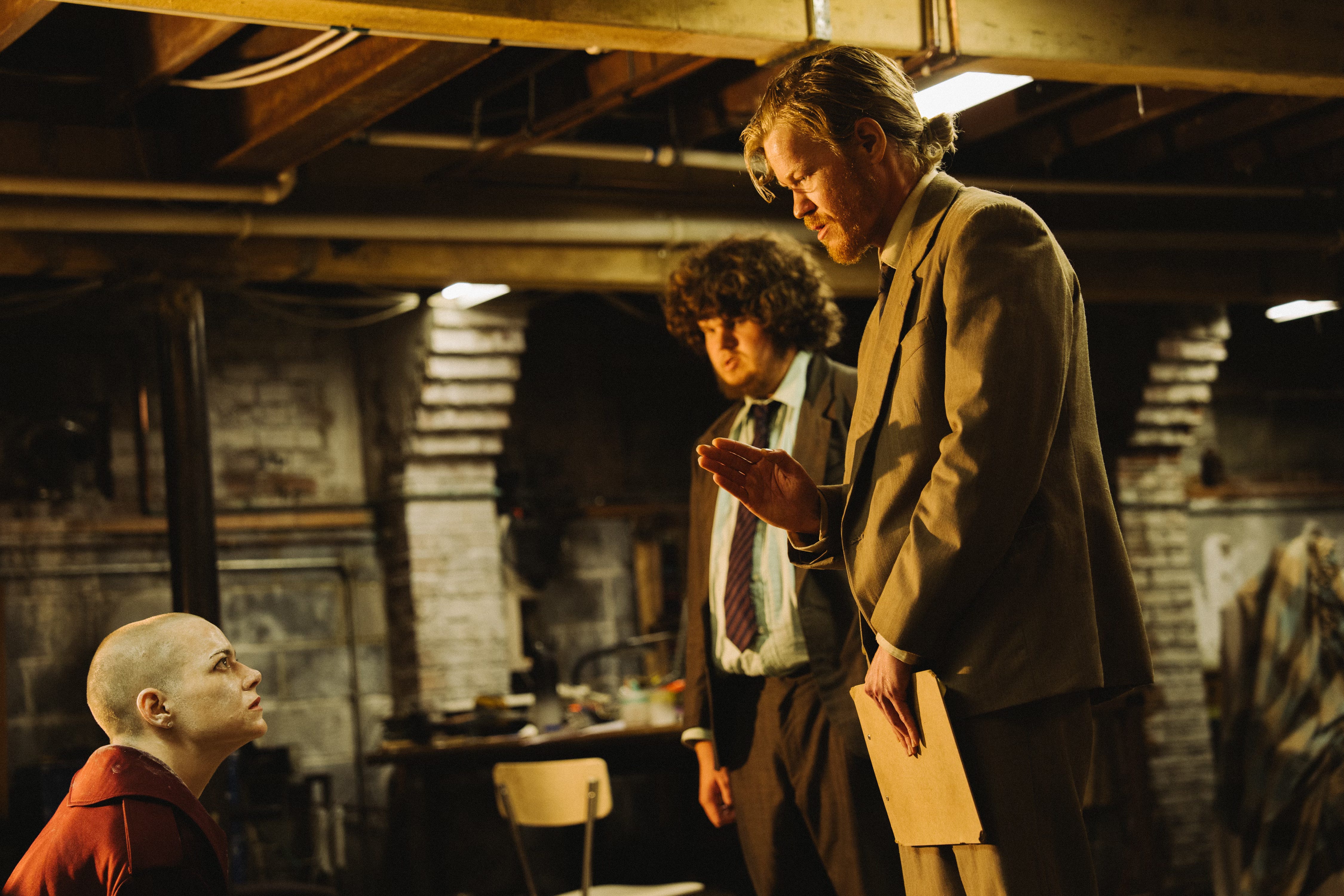
Bugonia is one of the most memorable films of 2025, and a story that, while fantastical, feels very much of the moment. A black comedy about two men who kidnap a corporate CEO because they believe her to be an alien. Directed by Yorgos Lanthimos, the brilliant and edgy filmmaker behind Poor Things, The Favourite, and Dogtooth, and starring his frequent collaborator, the amazing Emma Stone and Jesse Plemons in a transcendent performance as Teddy. The film is loosely based on the hilarious, bizarro 2003 Korean film Save the Green Planet!, which served as a springboard for esteemed screenwriter Will Tracy. Tracy has a knack for crafting timely parables of our era with films like The Menu and as a producer on films like Eddington, which could almost pair as a double feature with Bugonia, with its biting commentary that pulls no punches and manages to make everyone feel uncomfortable - in a good way. Tracy recently spoke to Immersive about this excellent, thought-provoking film. There are mild spoilers towards the end.
[This conversation has been edited for clarity and context.]
Watching Bugonia in a theater is a must because of the energy in the room. Early on, you can tell a lot of the audience is very skeptical of Teddy, nervously laughing at him...
They may be laughing at Teddy. It’s a normal tension response. It’s the only way to sort of relieve tension and remind yourself that it’s a movie, that I’m okay, and that everything’s fine. I think it’s pretty natural. But maybe they’re laughing at him. They could be.
What was your first impression when you saw Save The Green Planet! It’s been a good 20 years since I saw it. I remember it being a pretty wacky movie.
It is a pretty wacky movie. The flavor of the original movie is so specific that when I was watching it with adapting it in mind... I’d never heard of the film or seen the film - Ari Aster pointed me towards it. So when I was watching it with an eye towards what could I do with this? The fact that the tone and the flavor of the film was so strong and specific, there was a slight relief there because I felt like I would do this differently. So I already could sense the beginnings of what I could do with it. It’s a weird way to watch a movie for the first time when you’re already thinking about how you could adapt it. So I probably wasn’t watching it the way you should when watching a movie for the first time, on its own terms. In some ways, my memories of it are as hazy as yours probably, because I purposefully kind of put it out of my head after watching it.
Something that’s thats not in the cultural lexicon, it’s easy to forget details. I’ll revisit movies like, “I haven’t seen this in years,” and it almost feels like a new movie.
I don’t know a tremendous amount about New Korean Cinema, but I think it probably shares some gonzo, zany characteristics with many films from that period. I think it’s what makes those films so interesting and unique. I think I sense that this kind of story has been working its way into our culture and, lately, into our politics in contemporary America. I felt like maybe I didn’t need those zany cartoonish elements for this version, since it’s not like it’s too extreme for our modern, contemporary world. We all know people like this. He’s not so wacky in this because he’s actually maybe closer to the audience members than they might like to admit.
While watching this movie, I remember in the deep, dark days of COVID going to the subreddit called Collapse. Oh my God, the things that you read on there. And occasionally, not all the time, a legitimate news source, a legitimate article, and you’re like, “Holy fuck, we’re all done.” There’s always a shred of truth.
Of course, absolutely. That was very important to me that there was not only a shred of truth to his theories, but it was even more important to me that there was quite a bit of truth in what Teddy was saying about the world that he lives in. His community, his workplace, the country that he lives in, and human civilization itself. I kind of wanted a lot of what he was saying to feel authentic, and that he has a right to feel alienated.
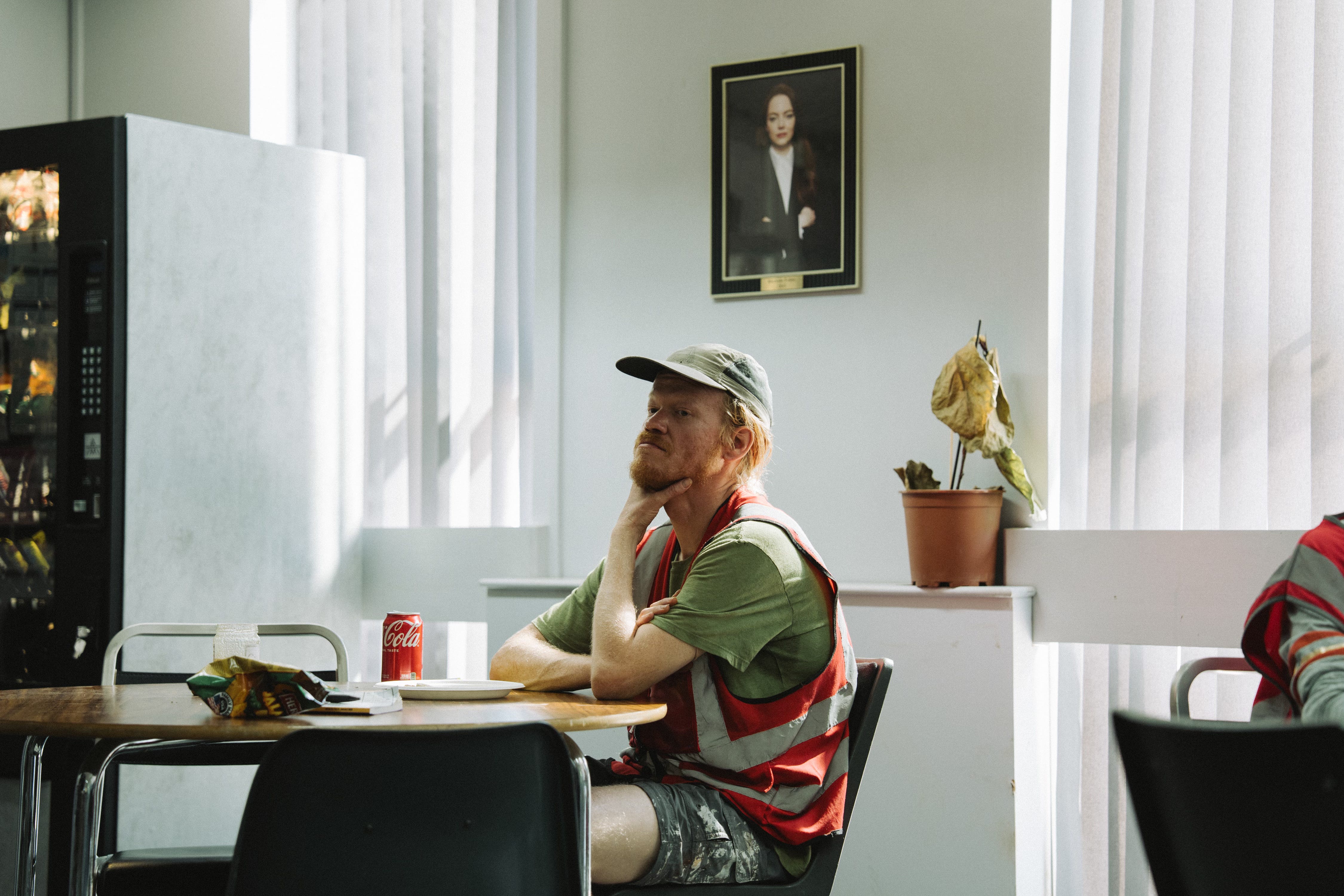
Teddy’s written with a lot of compassion. We are viewing the world mostly through his eyes.
I feel a strange defensiveness about him when people refer to him as a nut, crazy, or a villain. I don’t know if he’s a capital H hero, but he’s certainly not a villain. He’s like most people, somewhere in between.
The themes of this film pair well with Eddington, which you were involved with...
I’m a producer on Eddington, and I talked a lot with Ari in the early days of him writing that script. It’s got a lot of the same feelings. Eddington is sort of directly specific about those early COVID months. Bugonia was directly specifically written in those early COVID months. I think you can kind of feel that patina of COVID, the shadow of COVID hanging over the movie. In some ways, we’re kind of still in those months, aren’t we? The way that the movie speaks to that feeling, that atmosphere of not quite knowing what to trust, feeling quite isolated, and not quite feeling like there’s any sort of robust democratic project out there that’s going to catch you if you fall.
That sums it up right there. They may, in fact, push you instead of catching you, push you over the edge... It can be very alienating.
We don’t have to look too far back to find examples of this. All we have to look at is yesterday. In some ways, those problems have only gotten worse since I wrote the script. So the script feels increasingly relevant. I wish it weren’t. I would prefer that it wasn’t.
I’d love to hear about your writing method. Do you do the old-school handwritten notebooks, index cards, etc.?
I’m pretty traditional, but I don’t write by hand in a notebook. I do meticulously outline before I script. It’s got slug lines, interior basement day, and then I’ll describe exactly everything that happens in the scene dramatically and emotionally and even visually, and I’ll even include quite a bit of dialogue in the outline. So by the time I sit down and actually write the script, the hardest part has kind of been done. I’m mainly following the roadmap that I’ve already written, and it’s just quite a bit more dialogue writing that happens in the script.
This particular script was a fast one. I tend to write fairly fast, and I treat it like a job, especially now that I have kids. Once the kids are at school, it’s sort of a nine-to-five job, and I sit down and write during those hours. As the day goes on, I become less productive. As soon as I start to think about dinnertime and a glass of wine, I become less productive, and so I’m better earlier in the day. For Bugonia, I had very little else to think about because I wrote it in the thick of COVID, so I was locked down. I felt a bit inspired because I was feeling a bit isolated like Teddy myself...
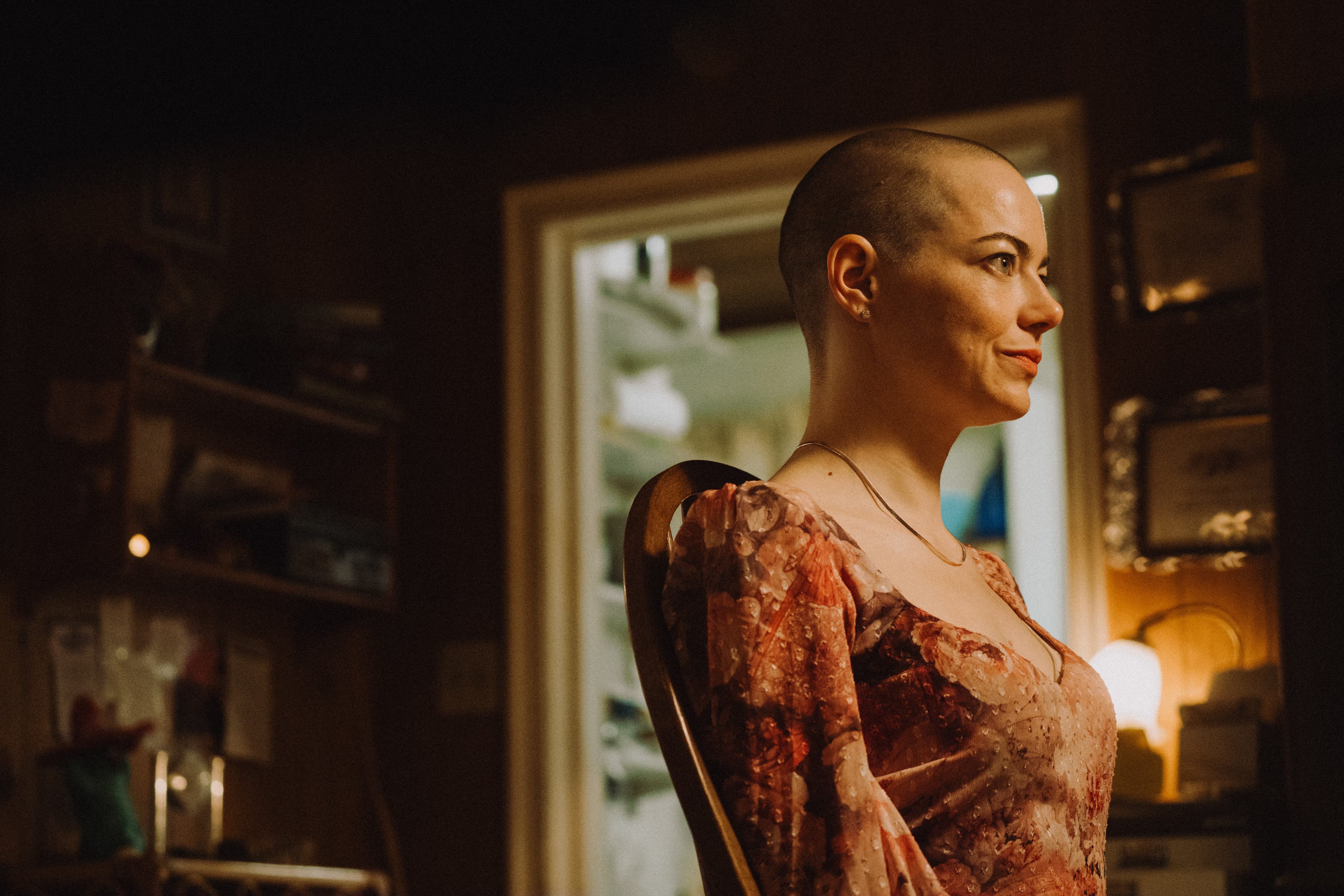
I love the progression of the film where you kind of see more of their minds. I like characters who reveal themselves. That’s not an easy thing to do.
In the original film, there’s quite a bit of shouting, and it’s very effectively done, but quite a bit of torture... I tend to be a bit squeamish about that sort of thing. I kind of structured it more around what I felt I could do, which was to have a series of fairly civil conversations between two people making their arguments with very dug-in cultural attitudes. They think they know each other because they’ve read about them online, only for their curated identity of who they are to be dismantled by their interlocutor. I wanted to structure around those big chats but keep it exciting. So finding a way to escalate that, right?
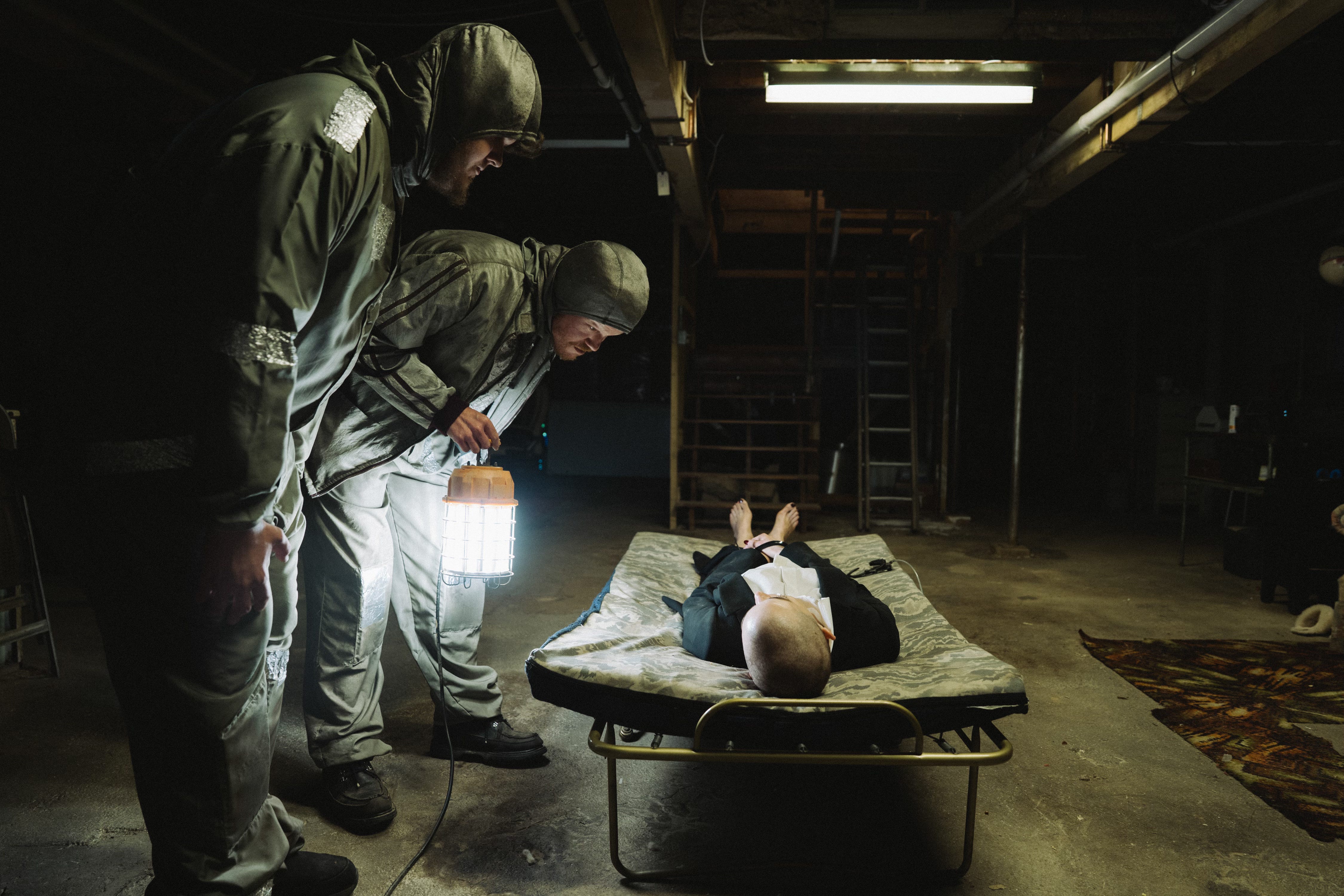
I knew eventually I wanted to get them out of the basement. The relationship can change, and maybe he starts to think she’s part of this elevated royal club, that she’s not just an admin. So we have this kind of dinner scene where they really do try to play nice for a bit until they don’t. Then we discover they have a history together. So yeah, just finding a way to avoid the same conversation again and grow that relationship a bit. In the process, they reveal things about each other.
One of the things I thought was fascinating about their relationship... On the surface, he’s kidnapped her, she’s his hostage, but there’s a respect that grows there. When he realizes she’s royalty, he treats her with more respect, and when she lets her guard down, she is impressed with how much he has figured out...
That’s right. It was important to me that neither of them was an idiot, and when they both make a mistake, it’s the kind of mistakes that clever people will make, right? He doesn’t just come off as a dumb or crazy or, you know, insert your whatever category you wanna put on him, right-wing or incel or whatever, that he’s not really any of those things.
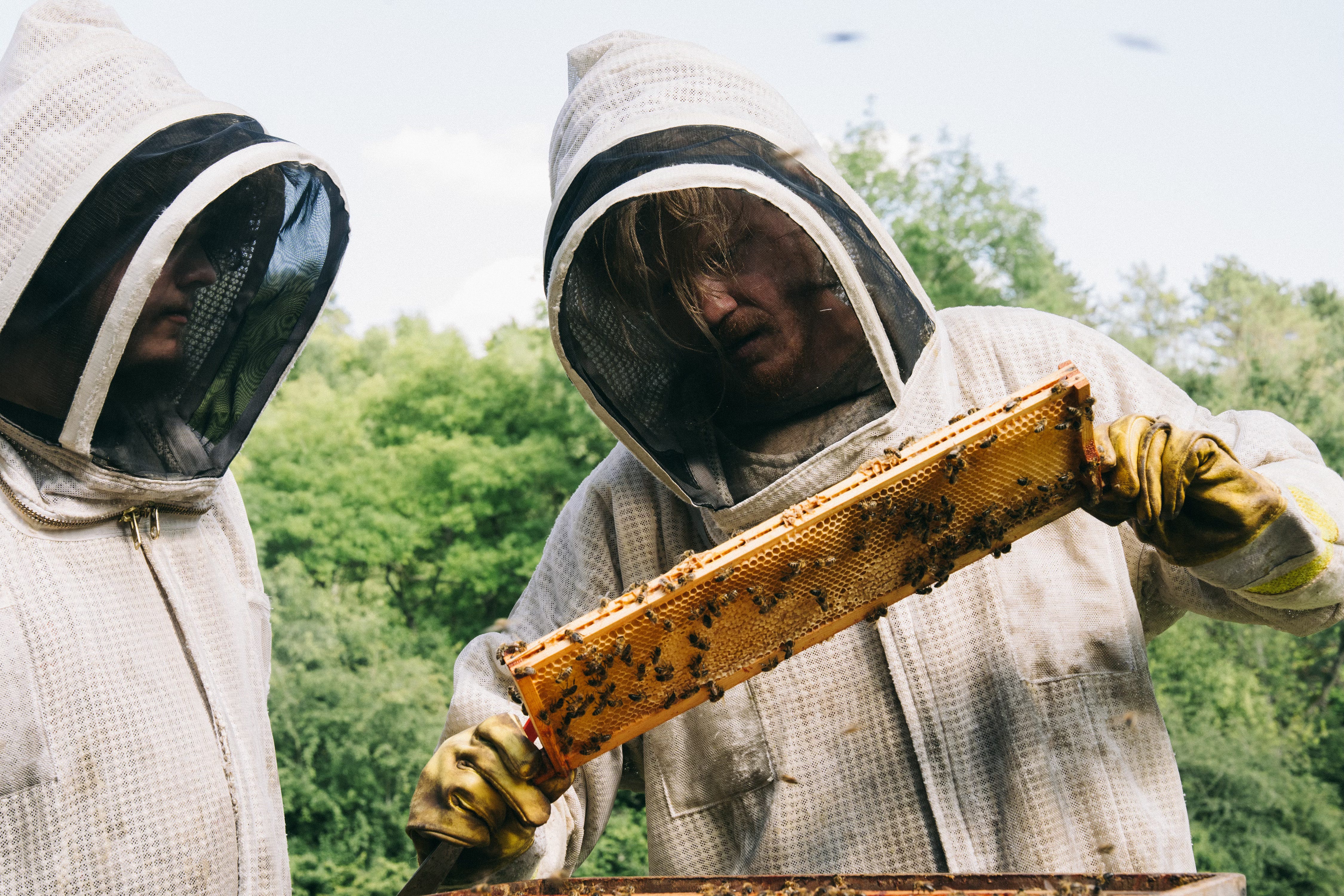
I was so glad... That it did not go that route.
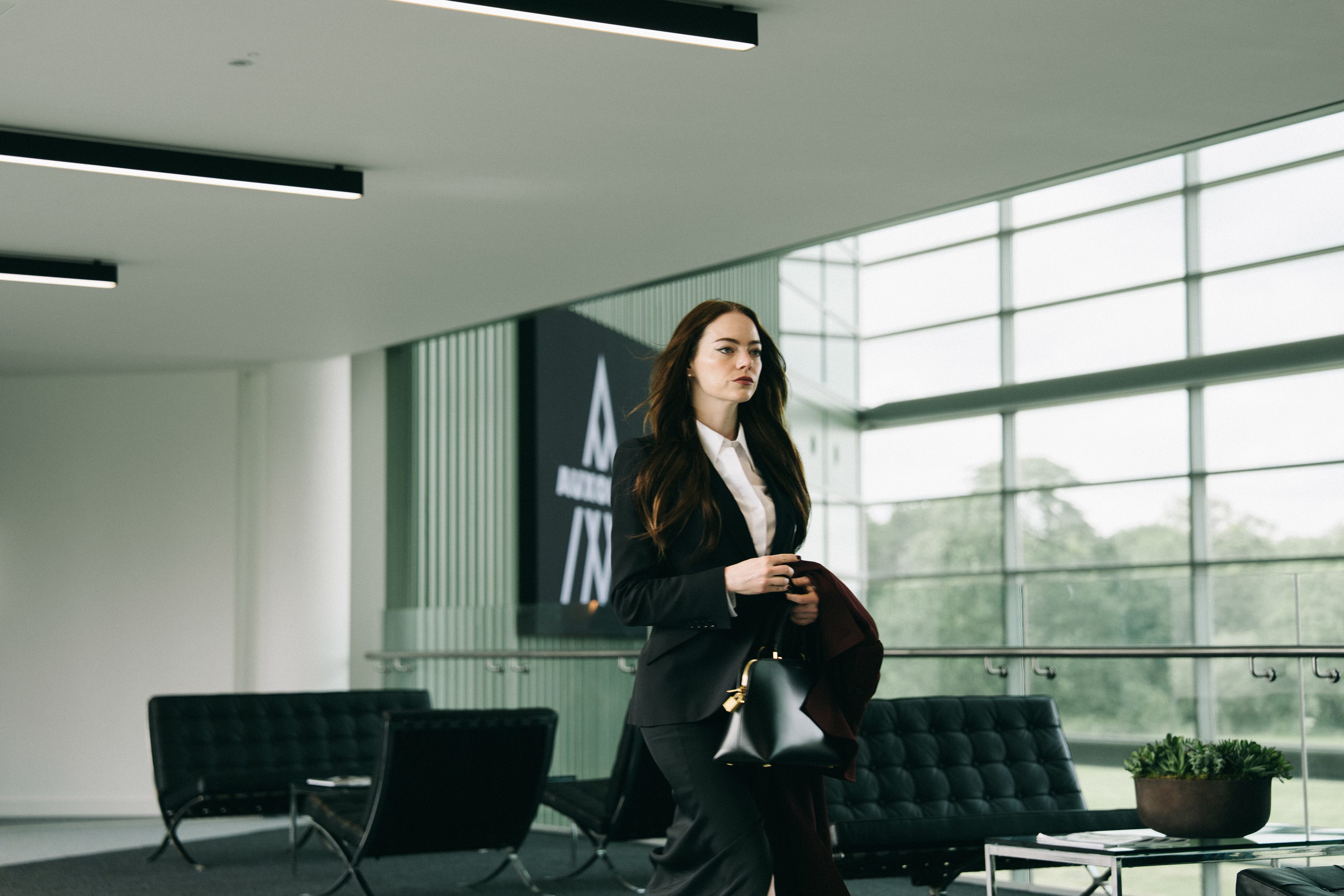
He’s something quite different and she is sort of this CEO type, but it’s not quite the CEO type that I’ve written on Succession because she has these sort of progressive optics that she’s weaponized a bit, and she’s quite aware of her status as like a younger female CEO and then for her hypocrisy to be dismantled a bit by Teddy.
I felt there was an unspoken dynamic in the theater. I kind of felt the energy was on her side... When the tables turned, I thought - Wow, this room got very, very quiet.
In this kind of situation, inherently, you have this desire to root for the captive to escape and to overthrow her captor, especially a woman being kidnapped by these two guys. That’s very different than the original film. It feels like a much more dangerous dynamic, right? I think some audiences are naturally inclined to be on her side. I think when it starts to shift, when I’ve seen it with an audience before, a bit is when you see him, you know, biking to work, and you see him with his coworkers, and you see how genuinely this person cares about the material well-being of his community and his family and his love for his mother. By this time, you’ve kind of seen her be a bit nasty and a bit ruthless and disingenuous, so you start to feel it shift a bit. That dance of moving between Teddy and Michelle, and who you sympathize with a bit. Then Don (Aidan Delbis) is sort of caught between the two. In a way, he ends up being more of the audience surrogate than either of the other two.
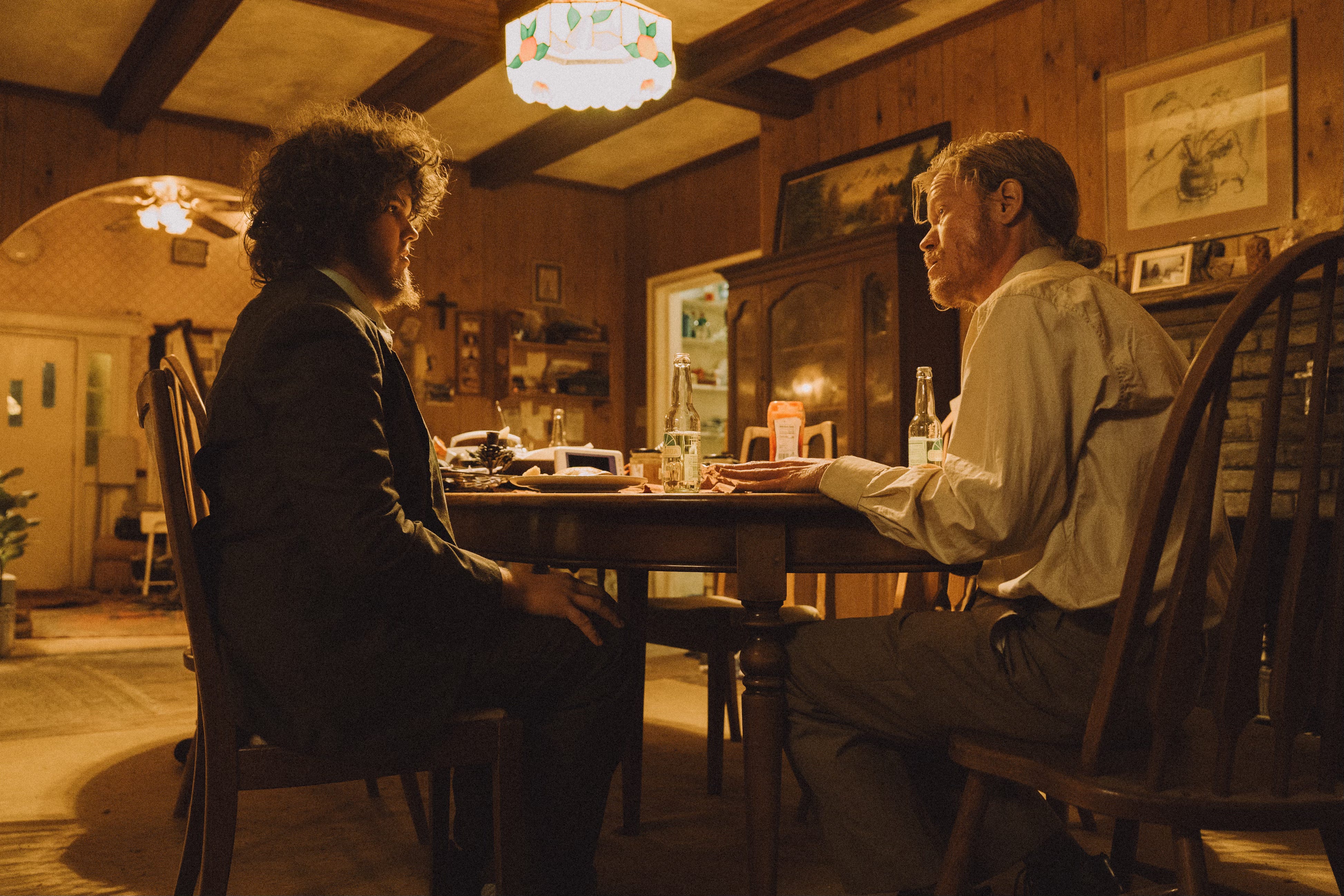
That’s true, actually. How did you arrive at the ending? It’s almost like a Planet of the Apes kind of ending...
I guess I wanted a vision of life on earth without us, and yet also with us, because there we are in those sorts of tableaux, right? So you kind of see us quietly when we’re not yelling at each other, you see us in all of our weirdness and funniness and sweetness and everything that makes us awful and everything that makes us kind of wonderful. It’s supposed to be a panorama of human experience and human life on this planet. Hopefully, that would make you think about our relationships with each other and with the planet. Some people find it bleak. I don’t see it as particularly bleak, personally. I see it personally as hopeful.
It’s certainly a fascinating ending when you’re walking out, because everything up until that point is conflict, and it’s kind of like very serene. It doesn’t get serene until we’re gone.
If you stay through even past the final images, if you stay through the credits of the film, once the song has ended and once the visuals have ended and you’re just looking at the titles, we’re still hearing kind of the nature around Teddy’s house and you hear kind of nature coming back to life and you hear the sound of a storm coming and then the storm is here and then the storm passes. So you get that feeling of nature’s cycles returning, and that has its own kind of hopefulness, too, if you wanna look at the film that way.
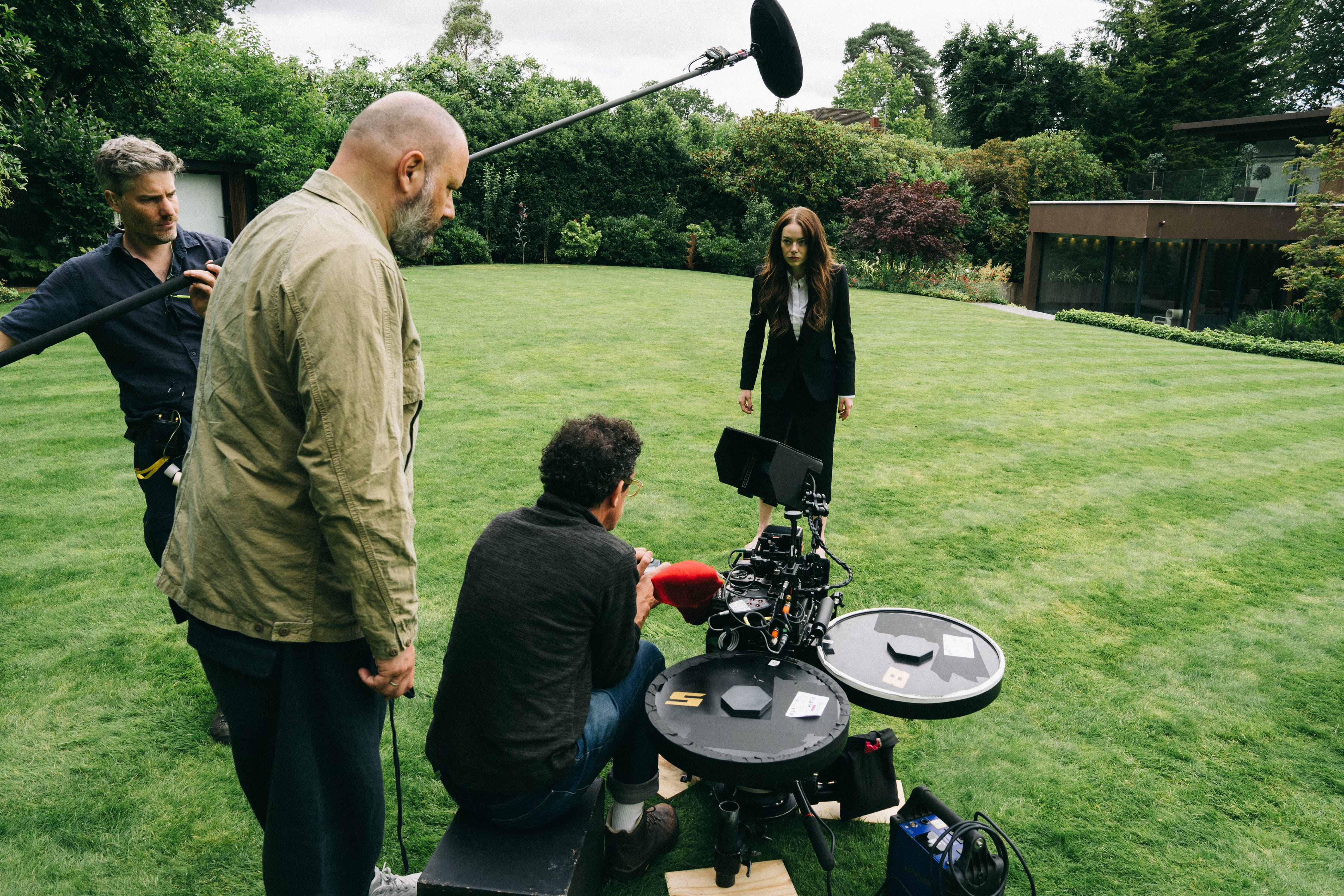
Sound Designer Johnnie Burn is incredible. What was it like working with Yorgos? I’ve seen most of his movies. He’s really built up a solid career of very interesting films.
I didn’t write it for him, but I think I inadvertently wrote a sort of Yorgosian script, in a way that was accidental. By the time we started working together on it, he really didn’t monkey with it much. Had had some very good, clear notes that only took a few days. Then he just kind of shot it. He was in tune with what I wrote. He knew how he wanted to execute it, and his notes focused on bringing it a little closer to his style. It was great. I’d work with him on every movie. We just have a good, very simpatico sensibility, I think.
He’s endlessly fascinating. This is a movie I’ve seen twice and have recommended to a number of people. I guarantee them that they will have an interesting conversation afterward. What’s it like being on the other side of this project?
It’s amazing, especially because it takes so long for anything to get made. I wrote this so long ago that it’s this strange thing where it’s sometimes even difficult to recall why I made certain decisions when I wrote the script. It’s incredibly exciting to be with that group because it’s mainly Yorgos who keeps making movies with the same kind of circus troupe again and again. So to join the circus with them has been really quite astonishing.
Bugonia is available to stream on all major platforms.