

Production Designer Mark Scruton On Returning To Nevermore In ‘Wednesday’ Season Two
The Emmy-winning production designer, who has a working relationship with Tim Burton, talks jumping back into the world of the popular Netflix Addams Family series.

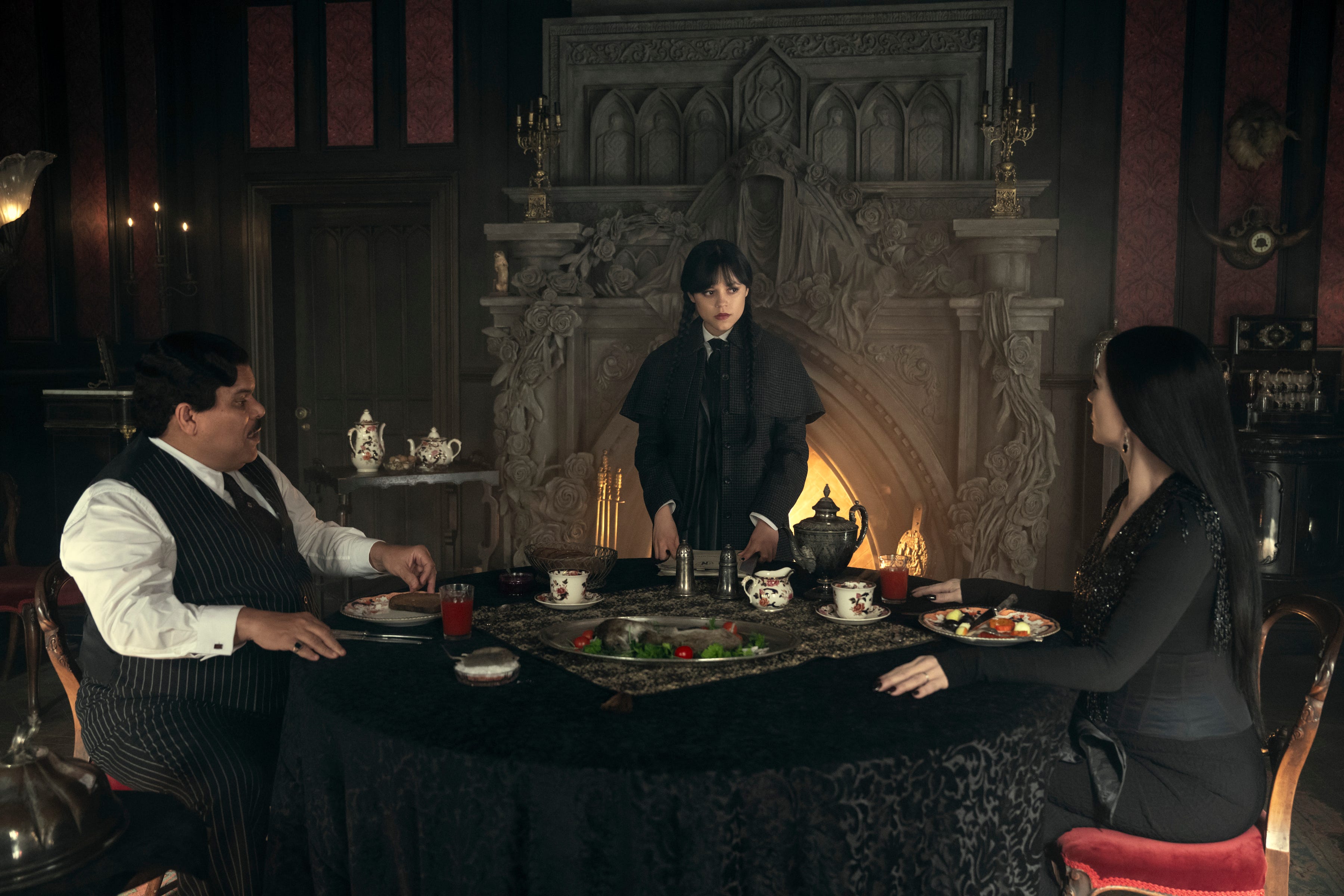
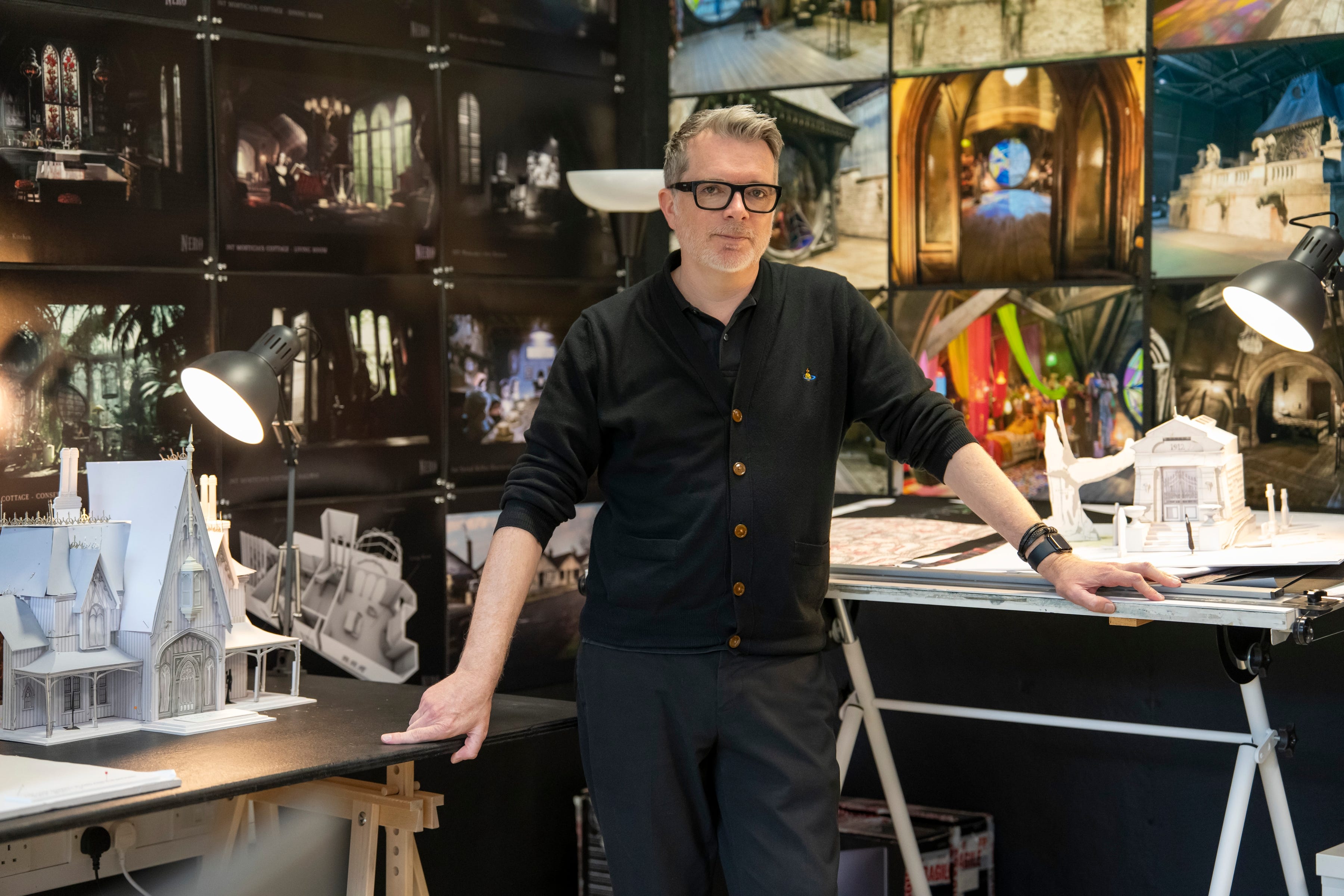
With season two complete and season three on the way, production designer Mark Scruton is back in the world of Wednesday.
The Emmy-winning artist has helped to shepherd the series’ creepy yet fun look across all three of its seasons, and Wednesday’s second bow is one of a few times that the production designer has collaborated with its director and executive producer Tim Burton. Outside of the Wednesday series, Scruton previously worked as the art director on Burton’s Miss Peregrine’s Home for Peculiar Children, and more recently, he also helped the legendary director on Beetlejuice Beetlejuice, the sequel to Burton’s classic 1988 film.
“You can be doing a set which you think is absolutely right and everything else, and (Burton will) come in and just steer one little thing off in one direction, and that might have a cascade effect which changes lots of other things, but it’d be one little nudge. Then suddenly, ‘Oh yes, we’re doing a Tim Burton show,’” Scruton told Immersive. “Sometimes (you) go, ‘OK, yeah, this is why we’re here.’ It’s a very gentle stewardship I would say on his part, but he knows what he wants, and that’s the important thing all the way through. It’s a very clear throughline through everything we do.”
The narrative of the second season of Wednesday allowed Scruton to expand on places we’ve come to know — like Nevermore, the school for teens with supernatural abilities of which Wednesday Addams (Jenna Ortega) herself attends — while still creating entirely new locations. In season two, the Addams Family, now involved in school affairs, lives close by Nevermore in a cottage that Scruton’s team initially painted pink in an homage to the sets used during the run of The Addams Family sitcom in the 1960s.
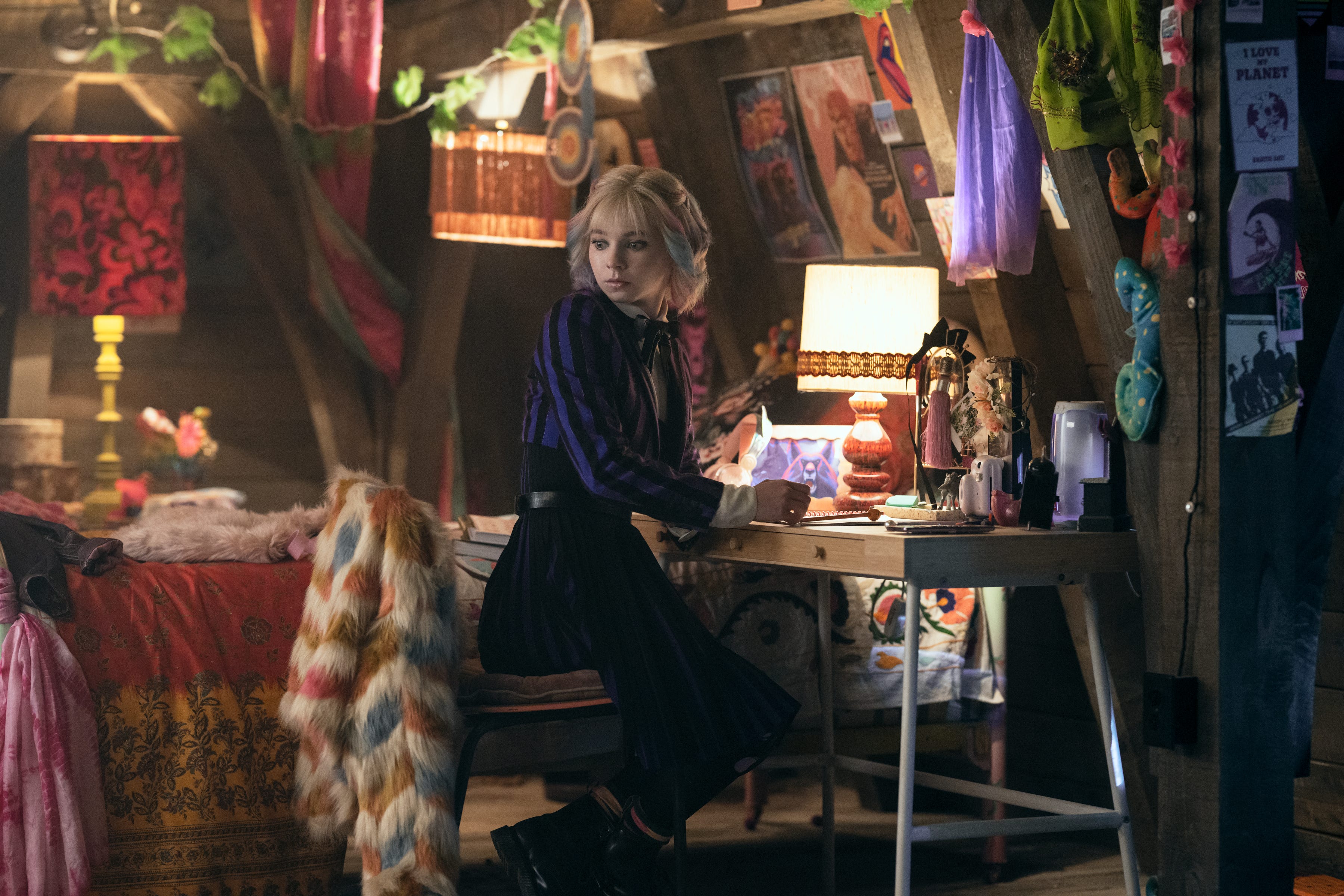
“Really the only main set that we carried over verbatim (from season one) was Wednesday’s dorm, and that had become so sort of iconic that we didn’t want to (change it) — and I think it would’ve been howling fans at my door if I’d really changed that, because for better or worse, that became so iconic to the show that we really couldn’t lay a finger on that,” Scruton said. “Nothing was really repeating itself (in season two) other than that one key set.”
Scruton recently spoke to Immersive via Zoom about the second season of Wednesday. During the interview, the production designer discussed jumping from Beetlejuice Beetlejuice to season two, where his work was expanded in the season, and one rule he tries to follow with his production design and art direction work.
[This conversation has been edited for clarity and length].
Because you’ve worked with Tim Burton a lot and you worked on season one and Beetlejuice Beetlejuice really recently, I’m curious: did (Burton) invite you back for season two? Was this something you always knew was going to be happening because you were around him all the time? What was the onboarding process like for you?
It was a little bit of a messy segue, really. We were doing Beetlejuice at the time, and there was a big push to get season two of Wednesday going at the same time. There was a bit of a conflict of schedules. I was in London — we were right in the middle of production — and it was very focused and Tim was very focused and obviously it was a huge deal for him and me. But they did want to push ahead with season two.
It started production, and I sort of had to, in many ways, say goodbye to it and just sort of take a deep breath and say, well, you know, I can’t do everything. It has to go out and do its own thing, and I’ll just be very grown-up about it and just accept that I can’t shepherd it any further. Then pretty much as we were wrapping up Beetlejuice — and it was a big problem with Beetlejuice as well — the writer’s strike hit. We had to shut down two weeks before we finished; we were in the middle of production in Massachusetts and had to shut, and we couldn’t complete the film. That got pushed way down the road until the autumn came around.
But simultaneously, obviously, Wednesday got put on hold as well; it wasn’t the best time for everybody, but what it did mean was coming out of the end of Beetlejuice, I then could actually jump onto Wednesday and run with that. It fitted in with Tim as well, because Tim was going to have trouble fitting in the whole thing with his schedule. Luckily, or otherwise, that meant we could do it, and we could sort of jump into it together once we came off the back of Beetlejuice. It was good, because we managed to finish it and that finished well, and we could roll straight into season two and make it the hat trick, so to speak.
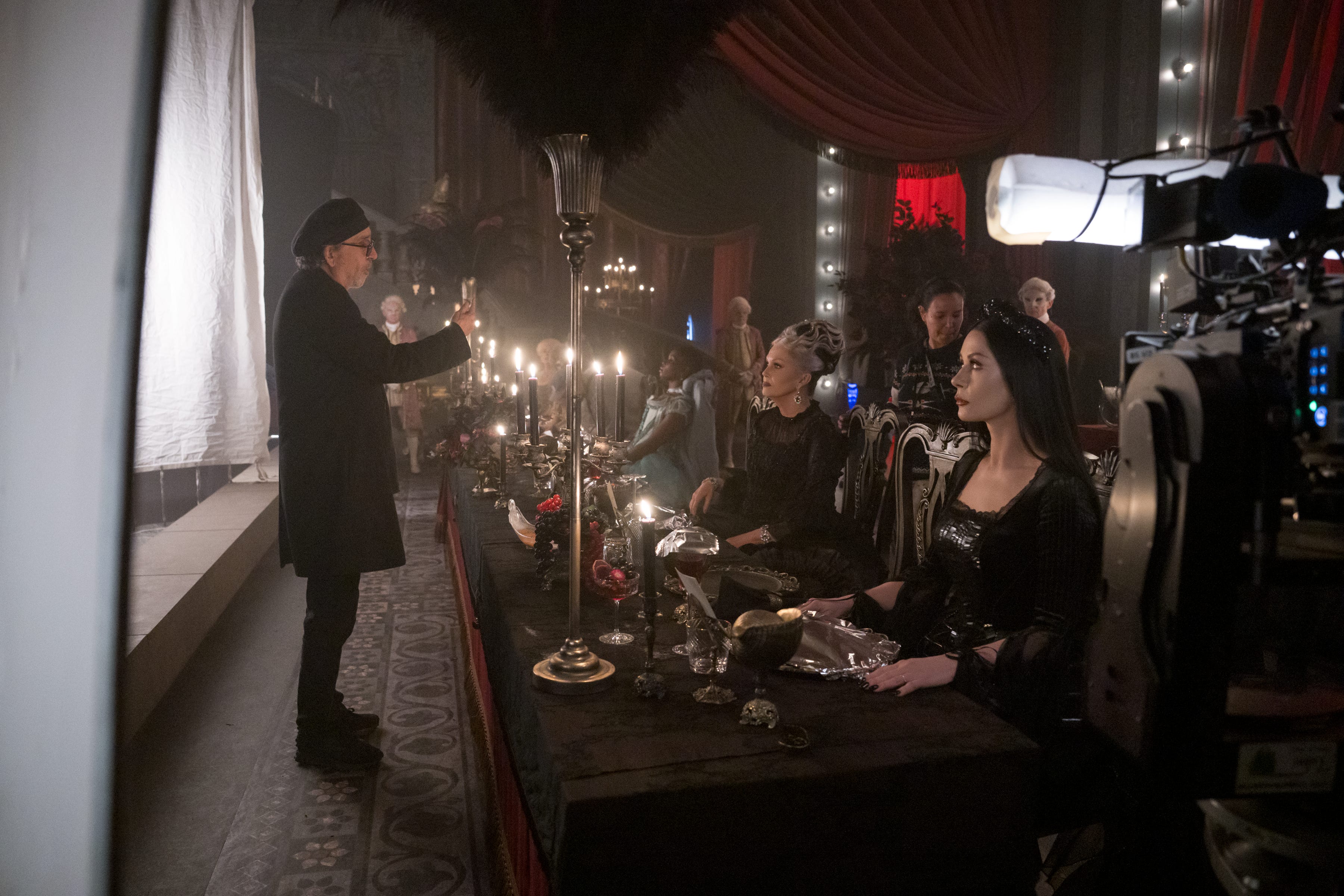
I have to ask: what are production design meetings like with someone like Tim? Because of his style being so macabre but also super fun at the same time, how does his style translate into your work specifically?
It’s very organic with Tim. He doesn’t sit down and sort of read you the Riot Act and tell you how it’s going to be. He’s very collaborative, which I was surprised at when I first started working with him, but he is. He wants to hear your ideas and your opinions, and it tends to evolve. He’s very organic in the way he approaches things. His beautiful little illustrations and sketches are really only jumping-off points to his own ideas as much as anything else. As we go along, I’ll put forward schemes or proposals that sometimes he’ll roll with (or) sometimes he’ll steer it a different direction, and as we go along he’ll then come in and shift it a little bit that way or that way. It’s interesting, because sometimes it’s very small changes that suddenly make it a Tim Burton thing. You can be doing a set which you think is absolutely right and everything else, and he’ll come in and just steer one little thing off in one direction, and that might have a cascade effect which changes lots of other things, but it’d be one little nudge. Then suddenly, ‘Oh yes, we’re doing a Tim Burton show.’ Sometimes (you) go, ‘OK, yeah, this is why we’re here.’ It’s a very gentle stewardship I would say on his part, but he knows what he wants, and that’s the important thing all the way through. It’s a very clear throughline through everything we do.


Where would you say your work was expanded the most in season two?
Season two, it really gave us more scale to sort of develop Nevermore. Nevermore was part of the puzzle in the first season, but we also had Jericho and we had lots of other sort of hearts of that storyline. But season two was much more Nevermore-centric. It gave us the opportunity (to) explore new areas and we could revisit things that we’d done before and do them in a slightly different way and build on that sort of eclectic mix of architecture and styles that we’d started.
Conversely to that, it also gave me the opportunity to explore whole other spaces. The asylum that we had was a whole throughline story in it. That gave me the opportunity to take a very different type of creepy (environment); the word gothic is used an awful lot to describe the show, but most of what we do isn’t really gothic, but it has that intent. There (were) two very clear defining things: we could expand Nevermore and we could create a whole other, new world, a new sort of creepy, spooky, Burton-esque (for) want of a better word, environment, but they were completely different. It was completely at odds with each other, which was nice. It was a nice thing to do; we weren’t repeating ourselves too much, which is always a danger with these shows.
One question I was going to ask you was if you’ve ever felt like you were just carrying over the work from season one, or if there were any areas that were kind of just replicated from season one. But it kind of sounds like you had a whole new task with expanding certain locales and going into new ones.
We’d obviously moved our shooting location; we moved from Romania to Dublin, which had its problems. You’d run a segue from somewhere which was very rich in this type of architecture that we enjoyed, into somewhere which had a very different style. We were still making an American contemporary show, so it had its own challenges, and I spent a long time scouting Dublin to find places that would continue that sort of architectural legacy. We did find them; we didn’t make the decision to go there until we’d found the right spots within it. We found some really cool locations that we knew could work with our aesthetic. But really the only main set that we carried over verbatim was Wednesday’s dorm, and that had become so sort of iconic that we didn’t want to (change it) — and I think it would’ve been howling fans at my door if I’d really changed that, because for better or worse, that became so iconic to the show that we really couldn’t lay a finger on that.
Even Principal Weems’ office from the first season; even though that was a location and we rebuilt it as a set this time around, we revised it and we changed it and we made it more appropriate to the new principal that Steve Buscemi played. Nothing was really repeating itself other than that one key set.
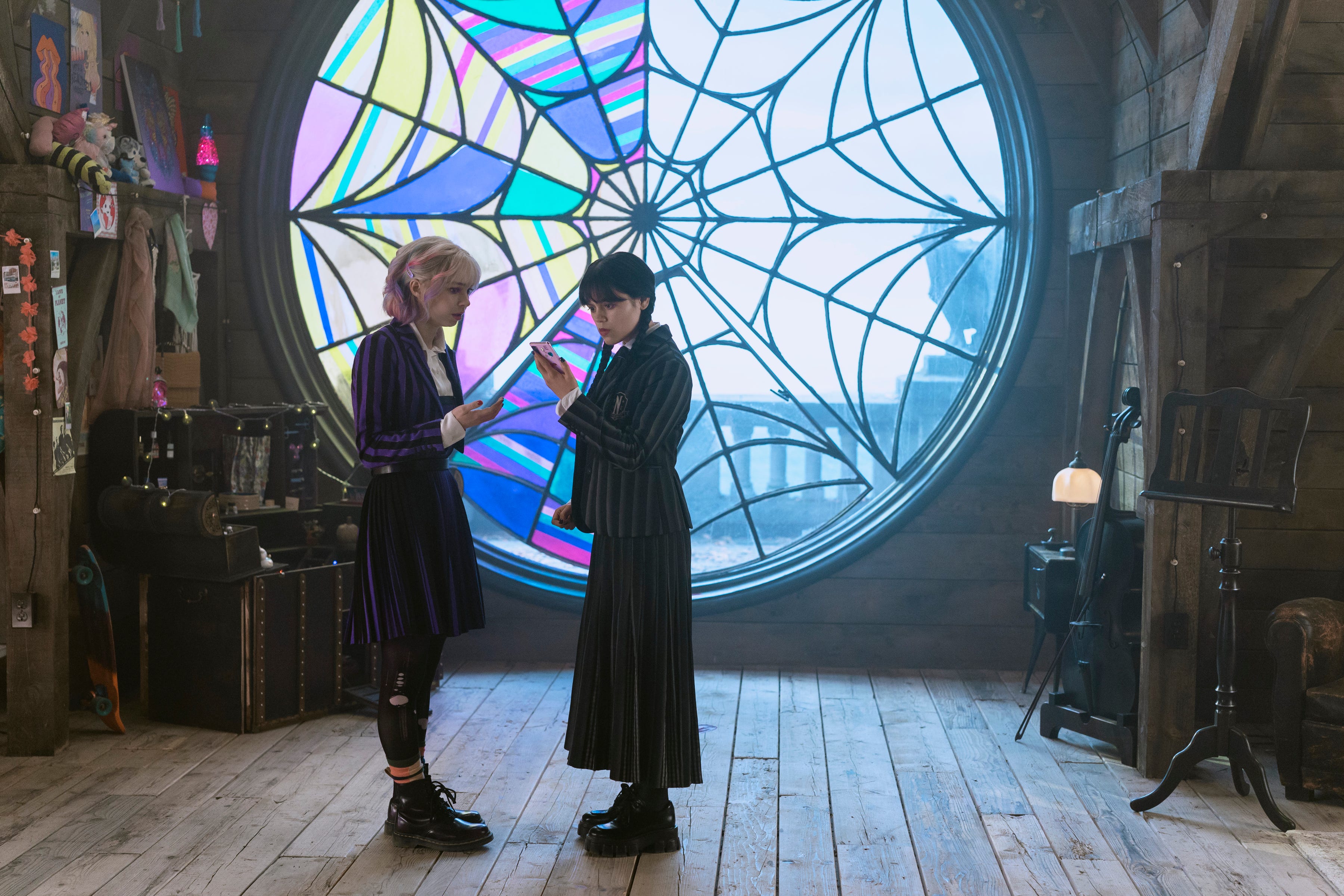
I figured Wednesday’s room was probably the thing that was most like, ‘This has to stay the same. This has to be just as it was in season one.’
Yeah. But that said, the only thing we had, which was a relief, was the window. Everything else had gone in the skip at the end of season one. We had to sort of forensically rebuild it, and that included reminding myself (of) the things that I’d changed along the way, because you couldn’t just pull out the blueprints and say, ‘Rebuild this.’ As any designer will tell you, as you go you tweak and you adjust and you say, ‘Actually, can you give me another foot on this wall? Can you expand this area? Actually, can we change that detail?’ A lot of that, some of it gets documented and some of it doesn’t, so you have to try to remind yourself (of) what you did to get to the end result, and that included tweaking the paint finishes. We used a lot of reclaimed timber in the original set, which we didn’t have access to as much of it. A lot of what was very beautiful old timber, we had to sort of fake it the same way. We even had to replicate the sort of splits in the wood and stuff to try and replicate it, which became its own little exercise in recreating stuff.


Can you share any fun anecdotes from the season about certain areas or props or decorations?
We had some interesting challenges. Certainly the gardener’s cottage, which was one of our big new sets — which was another fun environment actually that I didn’t touch on; we got to do an Addams Family-centric space, which we hadn’t done before. It was always the school or this or that, but this was an Addams Family-centric space. That, in its first incarnation, had to be this sort of vivid pink, (a) sort of chintzy horror show. I’ve spoken about this in other conversations; it was an homage to the original ’60s TV show, as well. When you look at the set photos in color, those sets were sort of vivid pinks and reds, and that was our little nod to that. Then it becomes the Addams Family gothic. But that was a turnaround; we had to do that in less than a week. We had to go from the full pink sort of nightmare to the full gothic Addams Family, and that became a scramble (or) chaos of painters covered in pink paint and everything else to get that ready.
There was so much in the season; from the team sort of trying to build Addams Family tents out in the wilderness to so many things that we had to do. You almost forget the volume of it. But it’s never dull on these shows. On this set particularly, every day is sort of a new challenge (and) either something you know is going to be a challenge, or something completely unpredictable happens and you’ve got to roll with it.
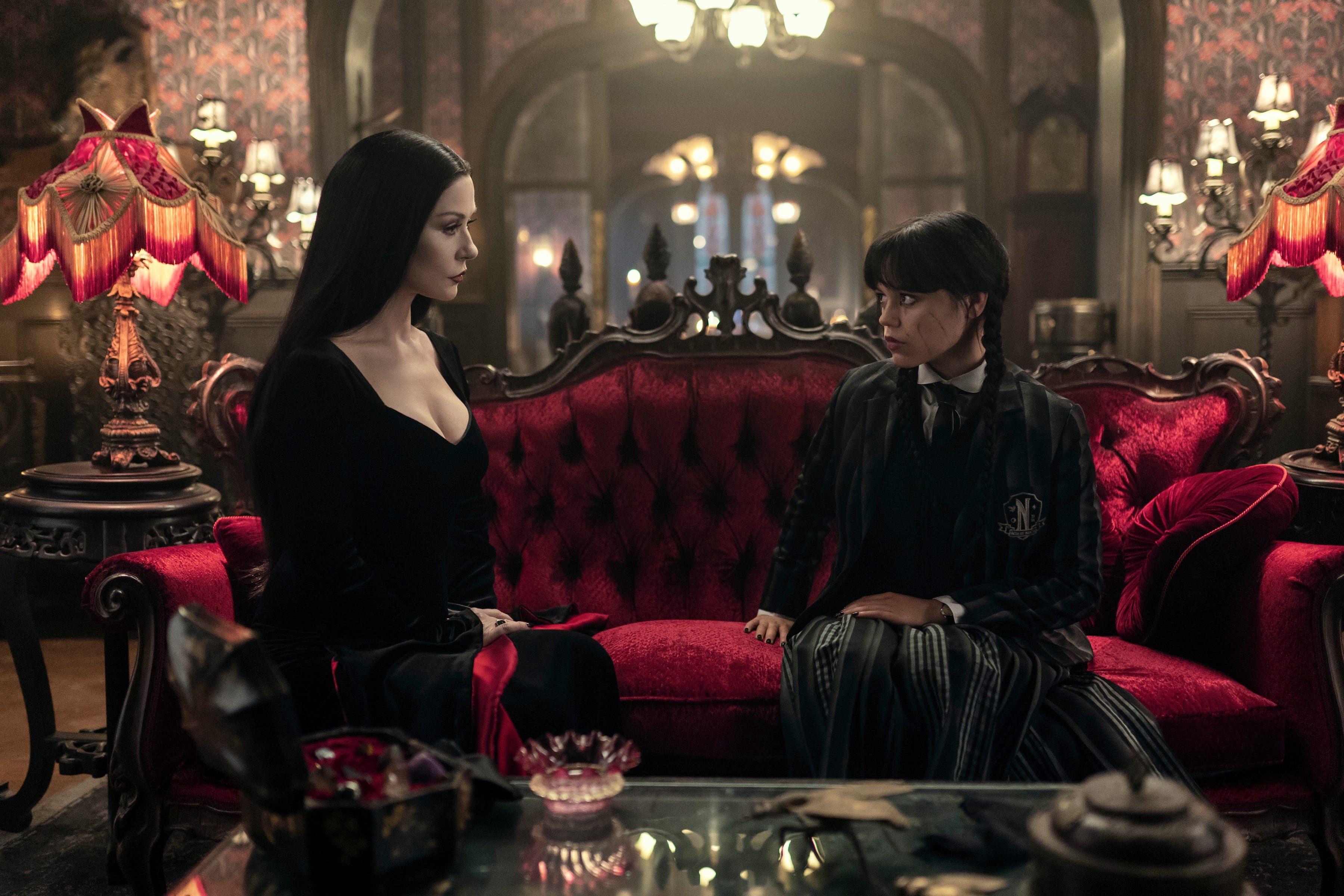
Despite any challenges or issues or big things you have to tackle, it’s such a fun world through-and-through to play in. Despite any challenges, you’re just having a good time because it’s just so cool to be in that world.
Yeah. Myself and my colleagues, obviously, whenever it’s getting really sort of stressy and everyone’s pulling their hair out, you do have to remind yourself that there’s not many jobs in the world that (you) have this much fun on. Even as a designer, there’s not many jobs (where) you have such a wide and amazing sort of brief, and working with the talent we’re working with. It is just a joy. Going into work everyday is you go up to the model makers or you go to the set dec department or you just look at the drafting team. It’s always fun stuff. You’re never like, ‘Oh gosh, not this again.’
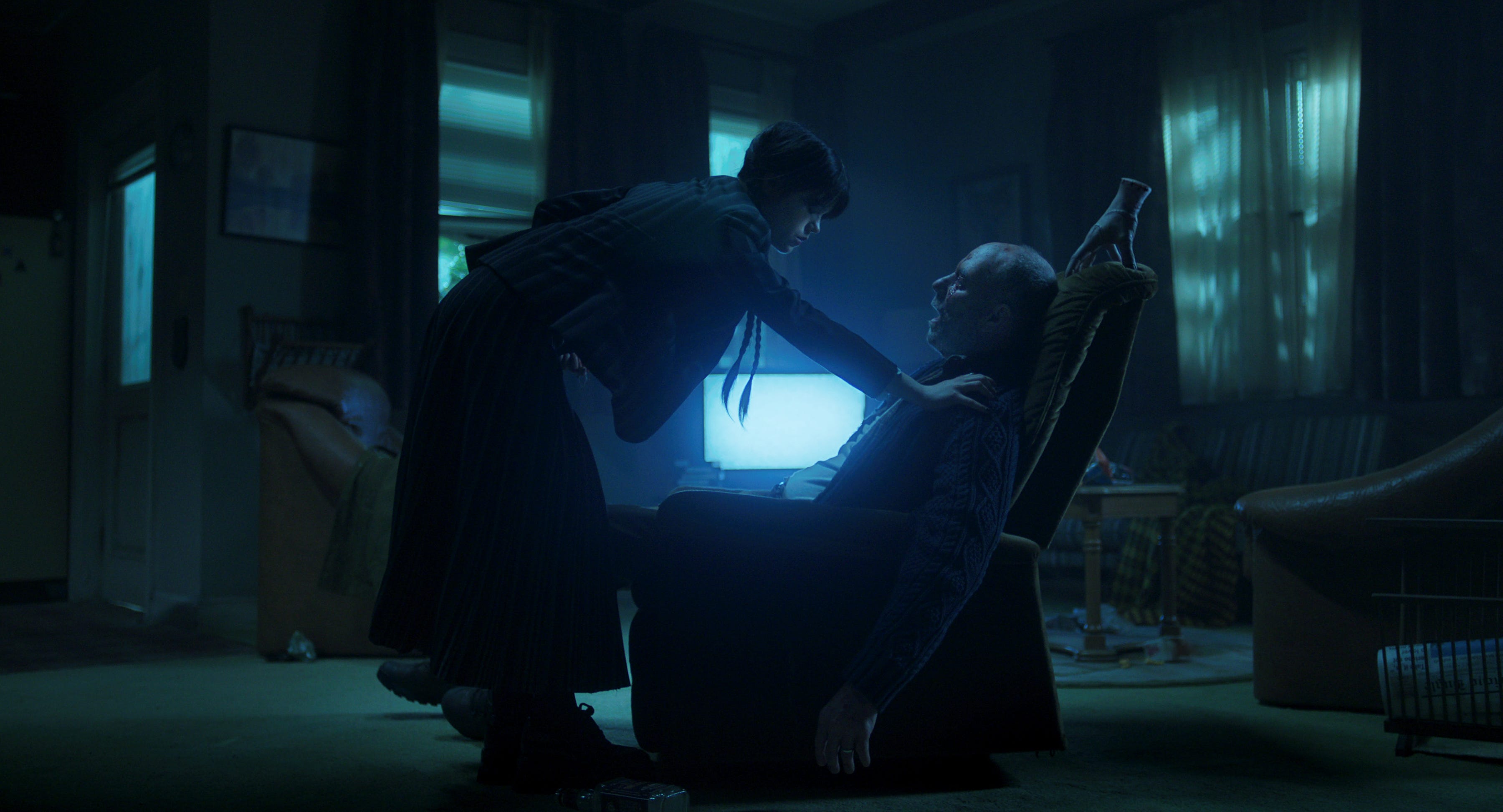
You sort of have these very, very earnest, serious conversations about the most ridiculous things. Sometimes you do have to go, ‘Guys, we’re talking about a sentient severed hand running around.’ Everyone’s getting very angsty about what can Thing do and how can Thing do this thing, and it’s like, ‘It’s still a severed hand.’ It’s fun and it’s silly, but it’s good stuff.
Is there one rule that you always go back to that you would say guides your production design and your art direction work?
You always break your rules. My art teacher back in school said you can’t break the rules until you learn the rules, so I always made sure I learned the rules. My career has maybe been a bit more elongated to getting where I am now because I was very diligent in learning the rules.
I think the main thing — you do so many different things, and you’re doing period things or you’re doing sci-fi, and it’s hard to apply the same rule all the time — but one thing my film school tutor said, and it wasn’t just about design, it was about filmmaking in general, was never be afraid of negative space, and never be afraid of black.
That was as much about framing as it was about anything else. His point was, if you’re lining up a frame, and 75% of that is actually darkness, don’t be frightened of that. In many ways, I use that a lot in terms of I’ll always look at the contrast of the environment that I’m creating and make sure it’s about light and shadow, and making sure that it has a shape and it has a form and it has a shape that lights well, but also that it has a clear grounding. There’ll always be a very dark tone in there somewhere to give it a base level; even if it’s a very light white set, it’ll always have something. One of the rules of Wednesday is we never paint anything sort of black. It’s always tones of, or it’s always very dark wood. It’s never just (a) tin of black (and) here we go, slop it on. I think that’s the same with everything. But it’s always her in that dark baseline.
That’s my rule anyway, and sometimes you will walk onto a set and go, ‘What’s wrong with it? Why isn’t this working?’ and then, ‘Ah yes, I need more contrast in it.’ Then suddenly it becomes a thing, and then you remember why you have that rule in the first place.
How do you feel to have another season of Wednesday behind you?
That’s a very interesting question considering I’m sort of in the middle of season three. It was very odd actually, I would say, because getting through season one was such a challenge. It had all sorts of challenges, and the production went on a lot longer than it should’ve probably, because we had COVID to deal with and we had wars to deal with and all sorts of things not directly affecting us, but definitely affecting the production, that made it a much more challenging situation.
I think getting that one done seemed like such an exhaustive thing, and then to have done another one, it was kind of slightly surreal, because (we’ve) done it all over again, and somehow we’ve come out the other side and we’re all still friends. It seems to have come out well. There’s such sort of challenges, and I said it earlier on: it’s sort of relentless, the challenges every day of what you’re trying to do. I’ve said it a few times in other conversations, but we’re trying to make an eight-hour feature film, effectively, on a sort of regular feature film schedule, which is exhausting. When you get to the other end, it’s like you’ve been running through a brick wall for sort of six months, and then suddenly you come out the other side.
I think you look back at everything you’ve done; like now I’m talking to you and I’m struggling to remember everything we did in that show, and then you watch it back and you’re like, ‘Oh yeah, there was that and there was that and there was that and there were these things.’ That in itself is kind of wild, to sort of lose track of the incredible things that everything has created. But it is a relief, and it’s nice to be in the middle of season three at the moment and revisiting all that stuff yet again.
Wednesday is available to stream on Netflix.